.
Showing posts with label Macro Photography. Show all posts

Tuesday, March 9, 2010

Macro Photography is a Way Photo Unique

Macro Photography, photography tips, landscape beautifulMacro photography has many possibilities and can show us the world from a different perspective. Even a photograph of a flower or animal taken by our impressive macro in a unique way. Usually it makes us feel bigger and experiences into a broad macro photographers. Macro photography is a special and somewhat different in specific ways. This is something we do not normally see in everyday life.

Macro Photography, history of photography, landscape beautiful
Macro Photography, photography tips, Basic Photography Concepts

Tuesday, November 17, 2009

Macro Photography - Digital Lighting Macro Photography

Lighting can be a problem for macro photography. While puffs May provide light necessary in some cases they may also provide a luminosity when the subject is close to the camera. To circumvent this problem, place the external flash units furthest from the subject. Another option for lighting macro photography is a reflector of light. The light reflectors are available in stores and the camera closes in white and gold.

What to do with a handheld or digital images of macro photography can reflect the beauty of an insect, a small coin, flower, or any other small and overlooked.

Macro Photography, Digital Lighting Macro Photography
Many digital cameras come with settings for macro photography, dramatically increasing the number of amateur photographers interested in macro photography. Once the device is set to Macro, the photographer has only zoom in on the subject and take the picture. The LCD is one of the key tools used in digital camera macro photography. Using the LCD screen, photographers can get closer to his subject and can quickly check the photo to see if a return is necessary. However, the LCD consumes battery power, so bring extra batteries if you intend to take a lot of those shots.Macro Photography, Digital Lighting Macro Photography

Monday, November 16, 2009

What is Macro Photography and How About Focus in Macro Photography ?

Macro photography means to shoot a subject in size on the negative or sensor. This means that the image on the negative is the same size as the subject in real life. In common usage, however, macro photography simply means a very big up image.

What is Macro Photography and How About Focus in Macro Photography, Macro Photography

Focus in Macro Photography
Because the topics of macro photography are often very small and the compression factor of depth of field on the ground must be very precise. For this reason, a stable tripod or other is highly recommended, even if you use a fast shutter speed. If you hand-hold the camera any forward / backward movement of your body will affect the focal point of the image. If a stable tripod or another is not an option because of the location or velocity of the object, use the shutter speed as fast as possible to reduce the risk of body motion change focal points. It is also recommended the use of manual focus. The depth of field in macro photography is often so small that only one piece of an object or other insects will be developed. It is essential in these cases that the "right" of the subject under discussion. For example, a portrait of a dragon's back when the insect is at home, but face out of focus is not a good image. The subject's face should be the focal point.

What is Macro Photography and How About Focus in Macro Photography, Macro Photography

Sunday, November 15, 2009

Macro Photography - Trees, Flowers and Animals

Take close-up pictures of little things called "macro photography." I have no idea why. Perhaps because the small things in macro photography are generally larger than the things you take pictures of when to do photography "microphone. If you really want to be pedantic then you should say that you "photomacrography. I take a lot more pictures in the past few months and have learned a lot in terms of technique and equipment, the time when an update.

Why do it?
There are, I think, several reasons for taking pictures, some apply to all photographs, some in particular the work of the macro. The key is the nature of beauty product, it comes in all shapes and sizes. Everywhere around you are examples I walk to work in the morning and watch the sky, it is different every day and every day is particularly wonderful. Trees and flowers are equally complex in their composition, a glorious combination of form and color, refined over millions of years. (controversial!)

Macro-Photography-Trees-Flowers-and-Animal
The photographer's challenge is to get as close as possible to reproduce exactly this beauty. This must be done in terms of color, shape and setting. True Colors, not over-saturated images' pretty, as nature is "pretty" enough without our help. The sharpness of the image and the right perspective is essential. Finally Put your subject, whatever it is May, in its own context, represent the area, as this will inevitably add to the life of the image.

To this end, I produced several sections of thought on how to do this task rather difficult. I do not like how the ideas are made photography confusing and difficult to understand, there is no art gray, I hope things are clear and intelligible. At the end of the day, I want to see quality photos of animals I love.

Digital Macrophotography Macro Photography and Camera Control

Digital Macrophotography
Many digital cameras come with macro photography settings, greatly increasing the number of amateur photographers interested in macro photography.

Once the camera is set to macrophotography, the photographer only has to zoom in on the subject and take the picture. The LCD screen is one of the key digital camera tools used in macrophotography. Using the LCD screen, the photographer can get closer to his or her subject and can quickly check the photo to see if a retake is needed.

However, the LCD screen consumes battery power, so bring extra batteries if you’re planning to take many of these shots.
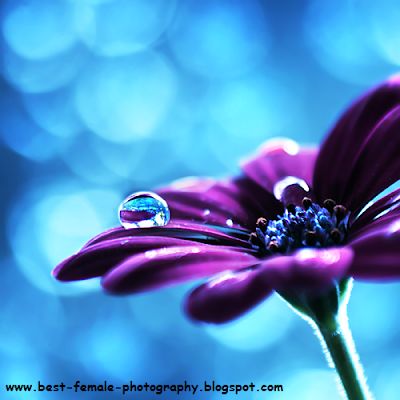
Digital-Macrophotography-Macro-Photography-and-Camera-Control-2

Macro Photography and Camera Control
Macro photography requires a very steady camera hand: the slightest camera movement can result in a blurry picture, especially if the camera is zoomed in for the close-up. While a tripod improves Macro photography pictures, the location of some nature subjects means that tripod use isn’t always possible.

Wind, even a small breeze, can move a macrophotography subject enough to cause blur on the picture. To avoid this, try to prevent the wind from reaching the subject. Taking the photo at a very high shutter speed helps catch a clear image when wind is a factor.

Macrophotography and Light
Lighting can be a problem for macro photography. Although flashes may provide needed light in some cases, they can also provide too much brightness when the subject is close to the camera. To get around this, place external flashes further away from the subject.

Another possibility for lighting macro photography is a light reflector. Light reflectors are available in camera stores and come in white and gold finishes.

Whether done with a manual or digital camera, macro photography pictures can reflect the beauty of an insect, small coin, flower, or any other small and overlooked item.

Digital-Macrophotography-Macro-Photography-and-Camera-Control